
Long-Term Care Access

Long-term care may not be the only issue in the next municipal election, but it matters to many local families. As more people need care, a key question is whether more long-term care beds can stay close to home.
This guide gives a quick overview of what has happened so far, what is being proposed now, and what you may want to listen for when candidates talk about long-term care, housing, taxes, and growth.
What to Know Before You Vote
The Town of The Blue Mountains has more older residents than many Ontario communities. By 2029, about 3,086 people age 75 and older are expected to live within a 15-minute drive of Thornbury.
This is not just a future issue. It is already affecting local families.
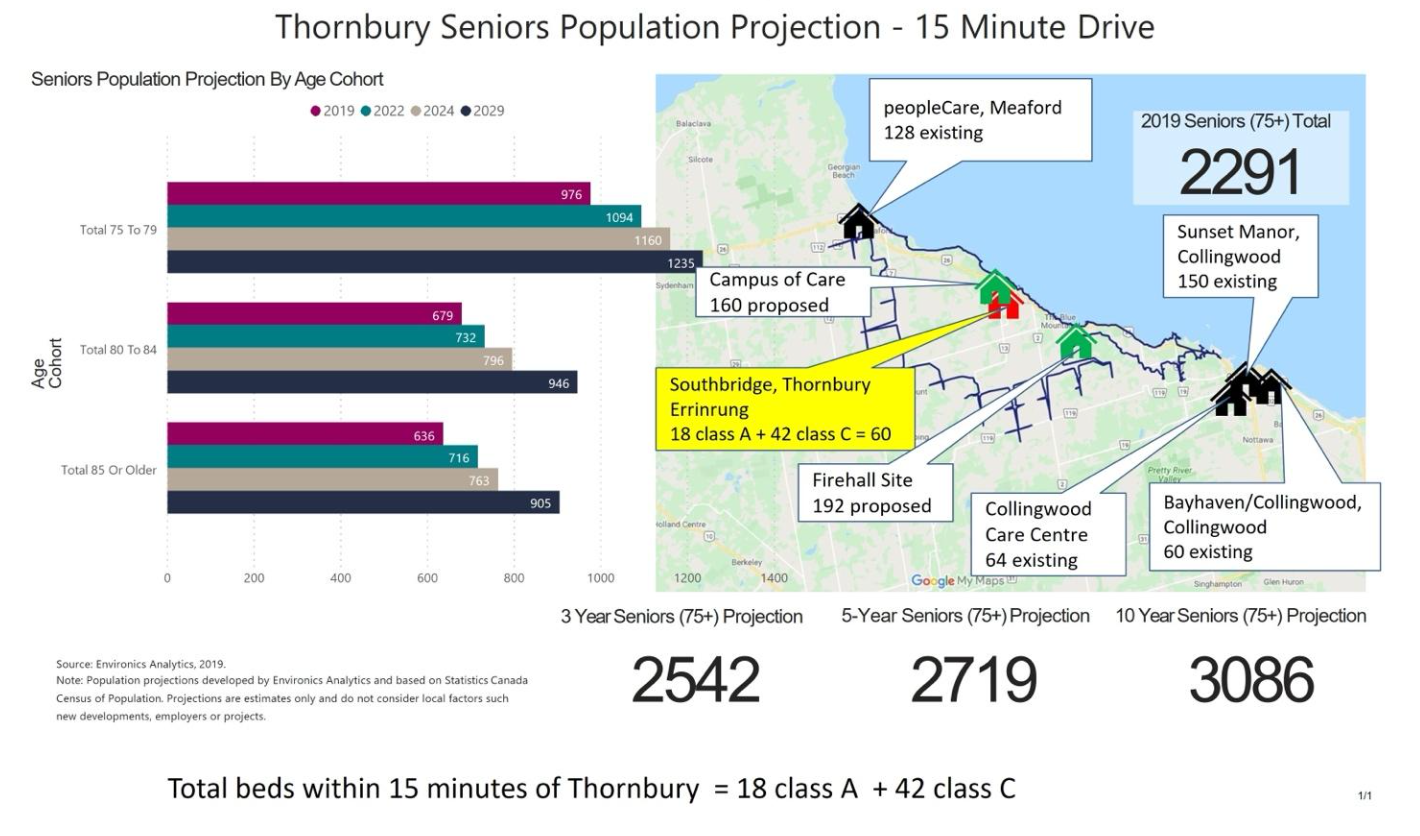
Errinrung in Thornbury is expected to close soon, and 887 people are on the waiting list for long-term care homes in Collingwood.
When there are no local long-term care beds, people may have to move to Meaford, Collingwood, Owen Sound, or even farther away. That can make visits harder for spouses, children, and friends.
For several years, the Town has been trying to bring more long-term care beds to the community, along with housing for some of the staff needed to run the home.
In 2020, the province gave TBM permission to pursue long-term care beds, and the Town began looking for a private partner to build them.
After a public process, the Town chose a proposal from peopleCare and the Skyline Development consortium. They planned to build the long-term care beds at 125 Peel Street as part of the Campus of Care project, and the consortium agreed to pay $15 million for the property.
The 125 Peel Street plan included long-term care beds, housing for staff, seniors’ housing, a daycare, and a location close to shops and a future recreation facility.
This project would not have required the expenditure of any municipal $. The municipality was just facilitating the development by arranging for the bed allocation and selling the land. The cost to service would have been paid for by the DC’s and user rates
That project ended in late 2024 after talks broke down. Reports said a major issue was the development charges the project would have had to pay to the Town.
The current plan is a partnership with peopleCare for a proposed 192-bed long-term care home near Grey Road 19, plus a proposed 112-unit rental and workforce housing project.
The main question is not whether more care is needed. The question is where it should go, what it will cost, and how much risk the Town should take.
When you hear candidates talk about this issue, listen to how they would balance faster access to care with cost and community concerns.
The Current Situation in the Town of the Blue Mountains
Campus of Care Proposal
In 2021, the Town bought land at 125 Peel Street in Thornbury and pursued a vision for a “Campus of Care.” The plan included a range of seniors’ housing options, from retirement living to assisted living and long-term care, along with other housing options.
The project also included workforce housing, a daycare centre, and other amenities. The site was tied to a provincial allocation to TBM of 160 long-term care beds.
That project did not move forward.
In November 2024, the Town formally ended negotiations on the 125 Peel Street plan after concluding the project was no longer financially viable, citing the increased development charges passed by the Town in April 2024.
The Grey Road 19 Proposal
In 2025, the Town entered a partnership with peopleCare Communities to support a new long-term care home. The project later shifted from the former Tee’s Please property because of environmental constraints and infrastructure requirements that made it less feasible for the Town.
The project then pivoted to town-owned land next to the future Craigleith fire hall on Grey Road 19.
In April 2026, Council conditionally approved the sale of about 3.2 acres of Town-owned land beside the future fire hall for $1.2 M so the project could proceed through the planning process.
The project is now going through a zoning amendment process. The application seeks permission for a site-specific institutional zone, and includes requests for modest changes to height, loading, planting, and parking standards.
The Grey Road 19 proposal includes:
A proposed three-storey, 192-bed long-term care home.
A related proposal by a developer for 112 purpose-built rental and workforce housing units on adjacent lands.
What to Listen for From Candidates
Most people agree that the community needs more long-term care options for seniors.
The harder questions are how to get these beds built, where they should go, how much public support is reasonable, and what trade-offs the Town should accept.
Here are some of the main issues to listen for when candidates explain their views.
Cost and Risk to Taxpayers
Under the current model, the private operator would take on much of the risk of building and running the home, rather than the Town doing it itself.
Voters may still want to ask what the Town would give up or pay for, such as land, staff time, water and sewer services, stormwater work, and road connections.
Staffing and Housing
A facility of this size would need many workers. In a place where housing costs are high, that means staffing is also a housing issue.
The former Campus of Care and the current proposal try to address that by linking the long-term care project with nearby rental and workforce housing.
Voters may want to think about whether they support that trade-off, including questions about density, parking, traffic, neighbourhood fit, and whether the housing would really help attract and keep workers.
Location, Growth, and Local Planning
Moving the project from Thornbury to Craigleith changes who would be closest to it, how it fits with nearby development, and how people may think about access, traffic, and community character.
Some voters may see the Grey Road 19 location as practical because it connects to future growth and services. Others may prefer a site closer to Thornbury, where more older residents live and where services already exist.
Voters may also want to decide how comfortable they are with changing zoning rules to support the project, including a bit more height and less parking and loading space.
